


Pepe Habichuela, the passing of a giant of flamenco guitar
8/6/2026
The Granada-born maestro leaves behind an essential legacy that brings together tradition, innovation and three generations of one of flamenco’s great dynasties.
José Antonio Carmona Carmona, universally known as Pepe Habichuela, died at the age of 82. He had spent the last two summers away from the stage due to illness. With his passing, one of the most influential guitarists of recent decades and a key figure in understanding the evolution of flamenco guitar disappears.
Pepe Habichuela was born in Granada in 1944, in the caves of Sacromonte. He grew up in a humble family of seven siblings with a deep flamenco tradition. Those caves, the cradle of the zambra, were his first school. There he learned to play by accompanying the dancing and singing of his own family.
He represented the third generation of a historic dynasty of guitarists. His grandfather and father passed on to him their love of the guitar. That legacy later continued through his son José Miguel Carmona, a member of the group Ketama.
The nickname Habichuela is also part of his story. His mother said that as a child he always asked for beans to eat. Another version linked it to his teacher, Juan Gandulla. Pepe always preferred to remember the family version.
At just 12 years old, he worked in a bread oven. Shortly afterwards, his father bought him his first guitar. He began playing in the streets of Sacromonte and travelled through villages in the mountains to help support the family. At the age of 16, he moved to Madrid with his brother Juan. That decision changed his life.
In the capital he found the place where he could develop a unique style of flamenco guitar. His way of accompanying flamenco singing, restrained and full of personality, made him one of the most respected guitarists in flamenco. He performed at legendary tablaos such as Corral de la Morería. There he shared the stage with artists such as Paco de Lucía, Juanito Valderrama and Camarón de la Isla.
His most important artistic bond was with Enrique Morente. Together they worked for three decades and recorded essential albums such as Homenaje a Don Antonio Chacón and Despegando, both released in 1977. The two Granada-born artists helped take flamenco out of the tablaos and into theatres, universities and new cultural spaces.
In the 1980s he released his first solo album, A Mandeli. The record paid tribute to his grandfather. From then on, he developed a career marked by faithfulness to tradition and a constant search for new sounds.
Pepe Habichuela was also one of the great driving forces behind flamenco fusion. His guitar left its mark on projects such as Ketama, Pata Negra, Martirio and Ray Heredia. He always understood that tradition could coexist with innovation.
Together with his wife, the bailaora Amparo Bengala, he enjoyed great success in Japan. He also explored the meeting point between flamenco, jazz and Indian music. That creative restlessness was reflected in Yerbagüena (2001), one of the most personal works of his career.
His contribution to flamenco art received important recognition. In 2018 he was awarded the Gold Medal of Merit in the Fine Arts. He also received the Grand Cross of the Civil Order of Alfonso X the Wise.
Among the many anecdotes he left behind, one involving Rosalía stands out. After listening to Los Ángeles, he told her: «You sing like an old woman».
His guitar fell silent forever last Tuesday, 4 August. Granada, the city where he was born, paid tribute to him at the Isabel la Católica Theatre. Family members, fellow artists and fans said goodbye to him with applause, flamenco singing and emotion.
Pepe Habichuela is gone, but he leaves behind a mark that will live on in every chord.
Source: EFE Agency / El País
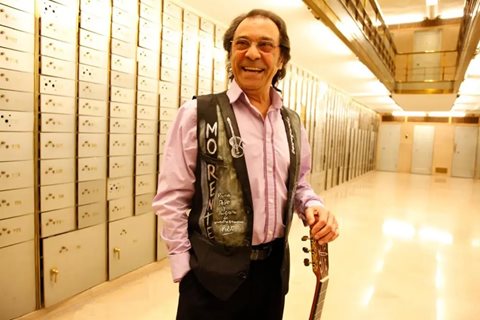
Pepe Habichuela - photo by Paco Manzano (source: Deflamenco.com)
